



New EU framework for state aid. How will TBER change Polish transportation?
The European Commission has introduced new regulations that change the rules for financing transportation projects. The TBER regulation makes it easier and faster for member states to grant financial support. The rail sector, inland waterways and multimodal transport will benefit in particular.
Transportation investments often require huge expenditures. Until now, many such projects have had to wait for individual approval from the European Commission. The new regulations remove this barrier. In this way, the Union wants to achieve the goals of the European Green Deal more quickly.
What is TBER public assistance?
TBER stands for Transport Block Exemption Regulation. It is the sectoral equivalent of the well-known GBER regulation. The European Commission created the document specifically with transportation in mind. TBER exempts member states from the obligation to notify Brussels each time they have projects that support green transport and move freight from roads to tracks or rivers.
The most important facilities for beneficiaries
The implementation of the new regulations brings four specific benefits to the market:
-
Faster procedures. Funding decisions are made at the national level. We bypass the months-long wait for notification at the European Commission.
-
Money for green rolling stock. The regulation gives preference to the purchase and modernization of low- and zero-emission vehicles. This applies to both locomotives and inland vessels.
-
Support for multimodality. You can more easily finance the construction and expansion of transshipment terminals. This is a key element in linking different transport modes.
-
Digital Security. TBER facilitates the subsidization of modern traffic management systems. This includes the implementation of ERTMS on the railroad.
TBER versus GBER – how does it work in practice?
TBER state aid does not replace the GBER regulation, but complements it. GBER has helped finance seaports, airports or electric vehicle charging infrastructure for years. Now TBER closes a loophole. It gives similar privileges to investments in land transport and inland waterways. This gives beneficiaries a clear and consistent playing field.
Where can you find a detailed analysis of the regulations?
The Center for EU Transport Projects is constantly monitoring changes in EU law. We are committed to ensuring that Polish applicants make smooth and flawless use of the new facilitations.
- Maybe you would like to read:New EU framework for state aid in transport on Open Rail portal
Various
 21 May 2026 | Various
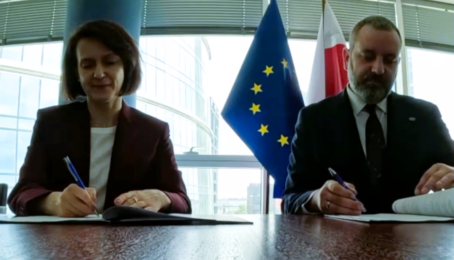
CEUTP and Pomeranian University join forces to develop transportation and competencies for the future
We have entered into a cooperation agreement with the Pomeranian University of Science and Technology (PSW) to work together in the areas of research, education and development of the transportation sector, with a particular focus on projects co-financed by the European Union.
More
 19 May 2026 | Press releases
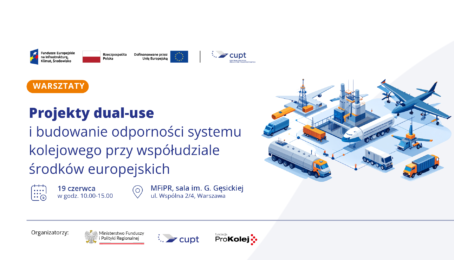
CEUTP at workshop on dual-use projects and rail resilience
On June 19, 2026, the Ministry of Funds and Regional Policy in Warsaw will host an expert workshop entitled. “Cooperation between the public and private sectors in dual-use projects and building resilience in the railroad system.” The event is organised jointly with the ministry and the ProKolej Foundation.
More
 27 April 2026 | Various
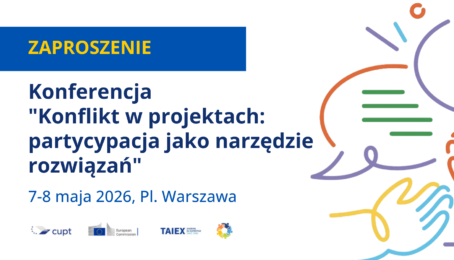
Last moment to register! Conference on public participation in transportation planning
This is the last chance to sign up for the conference “Conflict in design: participation as a tool for solutions”, dedicated to the role of public participation in planning and investment processes in the area of transport. The event will take place on May 7 – 8 this year in Warsaw.
More
 24 April 2026 | Various
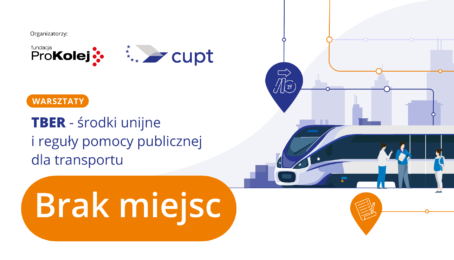
Completion of registration for CEUTP and ProKolej Foundation workshops
We would like to inform you that registration for the workshop organized by the Center for EU Transport Projects (CUPT) and the ProKolej Foundation on the issues of TBER, EU funds and state aid for the transport sector has ended.
More
Contact us
Plac Europejski 2, 00-844 Warsaw
Monday – Friday,
hours: 8:15 am – 4:15 pm