




TOB@SGH: A new chapter of cooperation between CEUTP and the world of science. Together about the future of transportation in Poland
What does Polish transportation look like after 20 years in the European Union? Are we really catching up with European leaders, or are we still halfway there? Participants in the first meeting of the new series TOB@SGH: Together about Transport, organized by the Center for EU Transport Projects together with the Institute of Infrastructure, Transport and Mobility at SGH, sought answers to these questions.
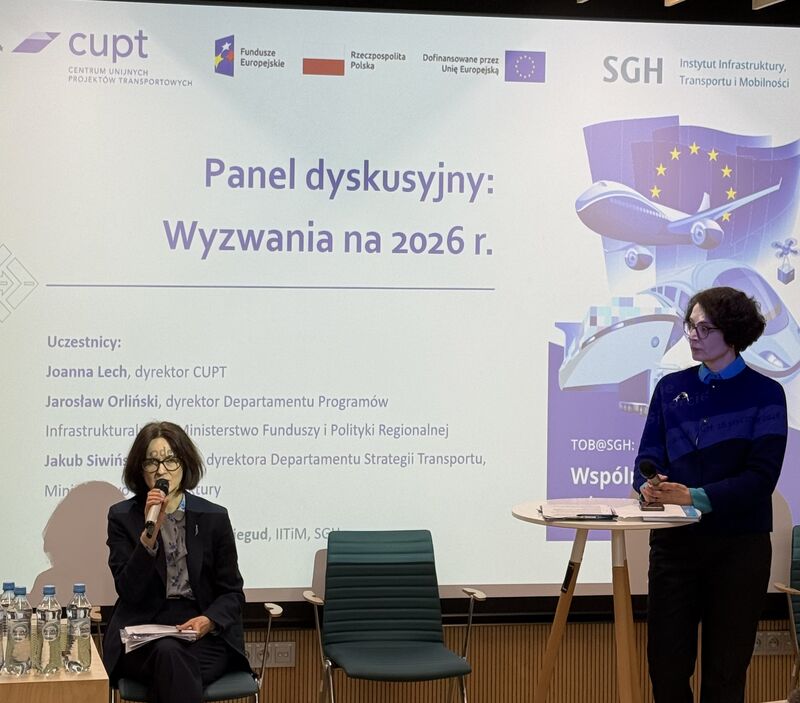
On January 16, 2026, the conference “Poland’s transport system – Are we catching up with other EU countries? Summary of 20 years in the EU and challenges for the future”, which was attended by experts from CUPT, SGH, the Ministry of Funds and Regional Policy and the Ministry of Infrastructure. The event inaugurated a completely new dialogue format – aimed not only at specialists, but also at the academic community and students, future participants in the transport market.
20 years in the EU – what has been achieved?
The conference presented the conclusions of the monograph “Poland’s Transport System: 20 Years in the European Union” edited by Prof. Jana Pieriegud – a publication that has become the starting point for a wide debate on the directions of development of the Polish transport system.
- Maybe you would like to read: Monograph: Poland’s Transport System: 20 years in the European Union
The discussion confirmed the impressive modernization leap Poland has made in the past two decades:
- The highway network and the modernization of major rail routes have significantly shortened the distance to Western European countries,
- rail and road rolling stock today presents a level that often exceeds the standards of many EU countries,
- Investments co-financed by European funds have enabled comprehensive improvements in safety, capacity and travel comfort.
The challenge is no longer “how much?” but “how?”
However, experts stressed that the next stage of development requires new, more complex answers. Infrastructure alone will not ensure the efficiency of the transportation system if it is not supported by integration, technology and competence.
The most important requests were:
1. integration of the transport system
Intermodality, interoperability between transport modes and smart planning are areas that require bolder investments and coherent strategies.
2. Digitization and data
They will become the foundation of modern transportation – from traffic planning to infrastructure management. Experts unanimously stressed: it’s time to move from counting kilometers to optimizing the system as a whole.
3. Demographic and competency challenges
The transportation industry is already facing a clear staffing gap that, if left unresolved, could slow further growth.
4. Energy transformation
Decarbonization, electromobility and ESG are no longer the future, but a standard that must be met for Polish transportation to remain competitive in the EU market.
TOB@SGH – a space for cooperation between science, administration and the market
The new TOB@SGH series is designed to enable a broad, open discussion on transportation – not only among experts, but also among students and young researchers who will co-create future transportation policies. The meetings are intended to build a bridge between practice and science, support data-driven decisions and promote a long-term view of public investment.
The event was attended by, among others:
Joanna Lech (CUPT), Dr. Michał Wolański, Prof. SGH, Dr. Jan Pieriegud, Prof. SGH, Prof. Dr. Wojciech Paprocki , as well as representatives of the MFiPR and the Ministry of Infrastructure.
Towards more meetings
The joint conference and monograph are the first step. CUPT and SGH promise to continue their cooperation – so as to build a more resilient, efficient and sustainable transport system in Poland.
Event reports
 30 June 2026 | Event reports
Liberalization on the Rails: CEUTP Discusses International Experiences, the Role of the Organizer, and Preparations for Market Liberalization
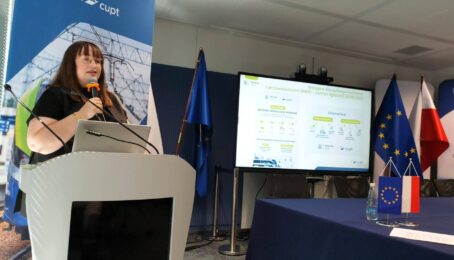
How can we prepare the rail passenger transport market for greater competition? What lessons can we learn from other European countries? And how can we ensure that the process of change is, above all, beneficial to passengers? These issues were discussed by participants at the 7th workshop of the Transport Research Observatory, titled “Liberalization on the Rails: What Works Abroad?”
More
 25 June 2026 | EFICE
CEUTP Training for Employees of Provincial Monument Preservation Offices
On June 16–17, 2026, CEUTP experts conducted a training session in Wrocław for employees of the Provincial Offices for the Protection of Historical Monuments, focusing on the principles for implementing a technical assistance project under the European Funds for Infrastructure, Climate, and Environment 2021–2027.
More
 25 June 2026 | EFICE
Expert Workshop on Dual-Use Projects and Transportation Resilience, Featuring CEUTP
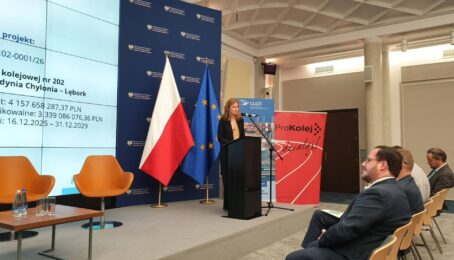
On June 19, 2026, an expert workshop titled “Dual-Use Projects and Building the Resilience of the Railway System with the Support of European Funds” was held in Warsaw. Among those participating in the event was Sylwia Cieślak-Wilk, deputy director of CEUTP, who presented an institutional perspective on the role of dual-use infrastructure in the EU’s current and future financial frameworks.
More
 25 June 2026 | EFICE
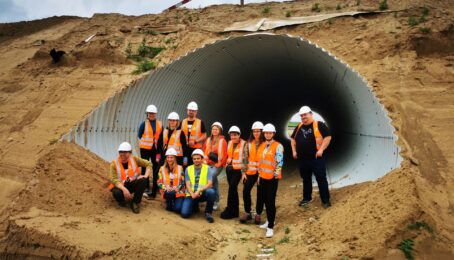
Via Carpatia Under Construction – CEUTP Experts Visit the Construction Site of the S19 Section North of Lublin
Experts from the CEUTP Department of Environmental Protection visited the construction site of a section of the S19 expressway north of Lublin, which is part of the international Via Carpatia route. The site visit provided an opportunity to assess the progress of the work and the challenges associated with the implementation of one of the most important road projects in eastern Poland.
More
Contact us
Plac Europejski 2, 00-844 Warsaw
Monday – Friday,
hours: 8:15 am – 4:15 pm


