




Transportation is for everyone. Really?
Do EU funds really support transportation accessible to everyone? The discussion showed that the answer is not simple – which is precisely why this meeting was so necessary. Although accessibility is today a formal condition for funding, it still too often remains only on paper. Passengers’ daily lives look different: curbs that are too high, mismatched ramps, no way to transfer with a wheelchair.
The 57th TOB meeting, co-organized by CUPT, the City of Lodz and MOPS Lodz, focused on one goal: to close the gap between design and real user experience. The event included a Mobility Parliament.
What drew the most attention
The data is there – but no one is using it
Railroads know how many passengers take advantage of discounts for people with disabilities, how many seniors or children. The numbers are growing, but the conclusions… even if there are they rarely translate into action.
Accessibility is a system, not a single element
An accessible bus stop and an inaccessible bus (or vice versa) is still the norm. A single ramp does not solve the problem.
Real-world testing works
Poznan invites people with disabilities to depots, children test streetcars. It’s practice, not theory – and it shows what really works.
Recommendations: the three most important
01. audit with real users before acceptance
Any EU-funded project should undergo a research walk-through with user groups with different needs – before it is picked up.
02. multi-channel passenger information as standard
Contrast, large letters, sound, pictograms, PJM on screens – this is not a luxury, it’s the basis of any interchange.
03. measuring outcomes, not just products
Not “how many ramps have been built”, but “how many passengers use them”. The data already exists – it needs to be analyzed.
Why is this important?
Transportation is not just infrastructure. This is the right to mobility – the foundation for equal participation in social, professional and public life.
We would like to thank all participants for their attendance, involvement and openness in the conversation about how to create transportation that is truly accessible to everyone. Your experiences, comments and recommendations are crucial – it is through them that we can design solutions that respond to the real needs of passengers.
Together we have shown that accessibility is not an add-on, but the foundation of modern mobility. Thank you for your contribution to the Mobility Parliament and for working together to build transportation that serves everyone.
Event reports
 30 June 2026 | Event reports
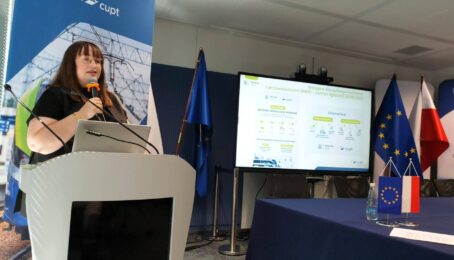
Liberalization on the Rails: CEUTP Discusses International Experiences, the Role of the Organizer, and Preparations for Market Liberalization
How can we prepare the rail passenger transport market for greater competition? What lessons can we learn from other European countries? And how can we ensure that the process of change is, above all, beneficial to passengers? These issues were discussed by participants at the 7th workshop of the Transport Research Observatory, titled “Liberalization on the Rails: What Works Abroad?”
More
 25 June 2026 | EFICE
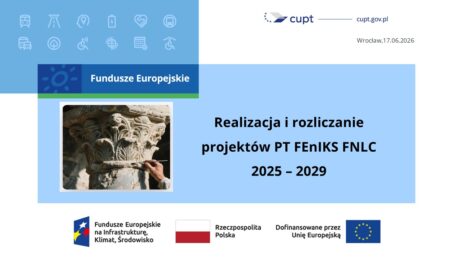
CEUTP Training for Employees of Provincial Monument Preservation Offices
On June 16–17, 2026, CEUTP experts conducted a training session in Wrocław for employees of the Provincial Offices for the Protection of Historical Monuments, focusing on the principles for implementing a technical assistance project under the European Funds for Infrastructure, Climate, and Environment 2021–2027.
More
 25 June 2026 | EFICE
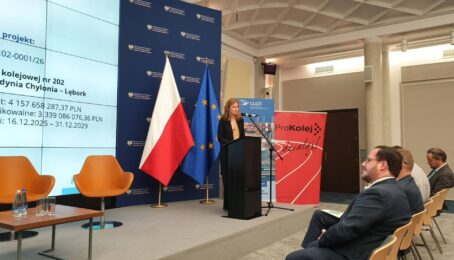
Expert Workshop on Dual-Use Projects and Transportation Resilience, Featuring CEUTP
On June 19, 2026, an expert workshop titled “Dual-Use Projects and Building the Resilience of the Railway System with the Support of European Funds” was held in Warsaw. Among those participating in the event was Sylwia Cieślak-Wilk, deputy director of CEUTP, who presented an institutional perspective on the role of dual-use infrastructure in the EU’s current and future financial frameworks.
More
 25 June 2026 | EFICE
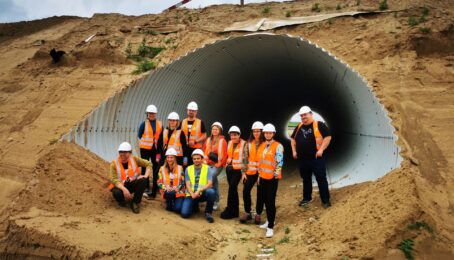
Via Carpatia Under Construction – CEUTP Experts Visit the Construction Site of the S19 Section North of Lublin
Experts from the CEUTP Department of Environmental Protection visited the construction site of a section of the S19 expressway north of Lublin, which is part of the international Via Carpatia route. The site visit provided an opportunity to assess the progress of the work and the challenges associated with the implementation of one of the most important road projects in eastern Poland.
More
Contact us
Plac Europejski 2, 00-844 Warsaw
Monday – Friday,
hours: 8:15 am – 4:15 pm


