




Sustainable urban mobility – how to implement it effectively?
European funds, appropriate legal regulations and involvement of local communities are among the key elements in creating conditions for the development of sustainable urban mobility, the participants of the 4th SUMP Conference pointed out. Among the speakers was Joanna Swiderska of CEUTP.
– We should look at sustainable urban mobility broadly and systemically. It is crucial to show the benefits, such as modern, punctual public transportation or the ability to change modes of transportation conveniently. At the same time, car traffic in city centres should be consistently reduced. Where good public transportation develops, property values rise, new neighbourhoods are built, and cities get a developmental boost,” said Joanna Swiderska, Director of the Department of Public Transportation at CEUTP.
The expert participated in a moderated panel, “SUMP – and what’s next? On implementation and beyond,” held as part of the 4th SUMP Conference. Also participating in the debate were:
- Katarzyna Zielińska-Heitkoetter, Ministry of Infrastructure
- Magdalena Koprowska, Municipal Office of Wroclaw
- Maciej Mysona, TOR Economic Advisors.
Panel was moderated by Maciej Wójcik, CEUTP.
- Maybe you would like to read: Click to watch the debate
Benefits instead of barriers – how to convince residents?
Successful and effective implementation of Sustainable Urban Mobility Plans (SUMPs) requires changing transportation habits. Building public acceptance by communicating the benefits is therefore key:
- Improving air quality and the health of residents,
- More comfortable and predictable travel,
- Better accessibility of various modes of transportation,
- Development of urban space and increase of investment attractiveness.
At the same time, cities should clearly present the solutions they offer to people who are giving up their cars for public transportation or active mobility.
The “carrot and stick” principle in practice
Changing traffic habits requires both incentives and restrictions.
“Carrots” include:
- A modern and accessible transportation infrastructure,
- Eco-friendly and punctual rolling stock,
- Convenient integration of different modes of transportation (e.g., interchanges),
- Safe places to leave a car (such as Park&Ride parking lots).
“The stick” constitutes, among other things:
- Restrictions on car traffic in city centers,
- Clean transportation zones,
- Changes in traffic organization, such as narrowing streets.
Time to give the cities back to the people
For years, cities have been designed mainly around cars, often at the cost of residents’ quality of life. Today, the need to change this approach is becoming more and more evident.
Sustainable urban mobility is not just about transportation – it’s also about:
- Less noise,
- Cleaner air,
- Safer and more welcoming public spaces.
Giving back city centers to residents promotes building healthier, more functional and attractive living spaces.
Sustainable urban mobility requires strategic thinking, consistency and multi-stakeholder cooperation. The key to success is to simultaneously demonstrate the benefits and implement solutions to reduce excessive car traffic.
Event reports
 30 June 2026 | Event reports
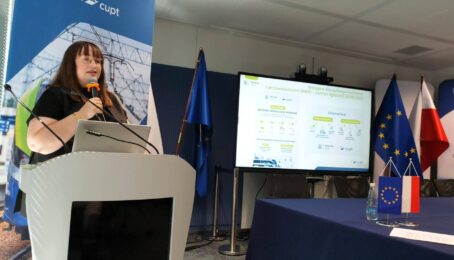
Liberalization on the Rails: CEUTP Discusses International Experiences, the Role of the Organizer, and Preparations for Market Liberalization
How can we prepare the rail passenger transport market for greater competition? What lessons can we learn from other European countries? And how can we ensure that the process of change is, above all, beneficial to passengers? These issues were discussed by participants at the 7th workshop of the Transport Research Observatory, titled “Liberalization on the Rails: What Works Abroad?”
More
 25 June 2026 | Event reports
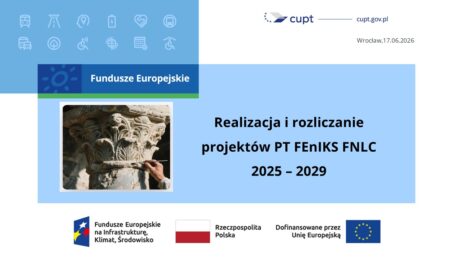
CEUTP Training for Employees of Provincial Monument Preservation Offices
On June 16–17, 2026, CEUTP experts conducted a training session in Wrocław for employees of the Provincial Offices for the Protection of Historical Monuments, focusing on the principles for implementing a technical assistance project under the European Funds for Infrastructure, Climate, and Environment 2021–2027.
More
 25 June 2026 | EFICE
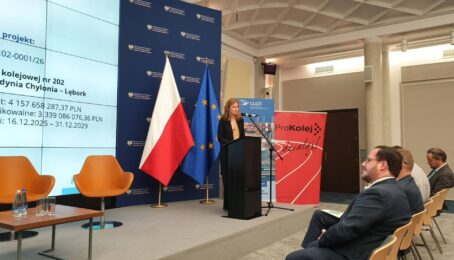
Expert Workshop on Dual-Use Projects and Transportation Resilience, Featuring CEUTP
On June 19, 2026, an expert workshop titled “Dual-Use Projects and Building the Resilience of the Railway System with the Support of European Funds” was held in Warsaw. Among those participating in the event was Sylwia Cieślak-Wilk, deputy director of CEUTP, who presented an institutional perspective on the role of dual-use infrastructure in the EU’s current and future financial frameworks.
More
 25 June 2026 | EFICE
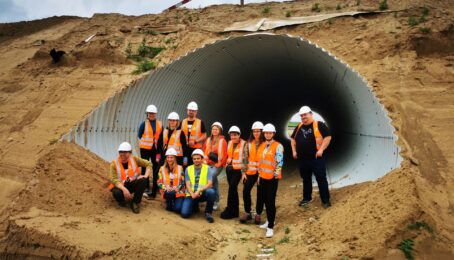
Via Carpatia Under Construction – CEUTP Experts Visit the Construction Site of the S19 Section North of Lublin
Experts from the CEUTP Department of Environmental Protection visited the construction site of a section of the S19 expressway north of Lublin, which is part of the international Via Carpatia route. The site visit provided an opportunity to assess the progress of the work and the challenges associated with the implementation of one of the most important road projects in eastern Poland.
More
Contact us
Plac Europejski 2, 00-844 Warsaw
Monday – Friday,
hours: 8:15 am – 4:15 pm


