




Participation of a CEUTP Representative in Workshops on the Strategic Public Procurement Project in Craiova (Romania)
The meeting was also attended by representatives of the Directorate-General for Regional and Urban Policy of the European Commission (DG REGIO), the Organisation for Economic Co-operation and Development (OECD), the Dutch Ministry of Infrastructure and Water Management, the Norwegian Agency for Public and Financial Management, and the Centre for EU Transport Projects (CEUTP).
During the meeting, the following presentations were delivered:
1/ Ms Justyne Balasinska (DG REGIO, European Commission, Belgium) and Ms Erika Bozzay (OECD, France) presented the importance of public procurement for the European Union market and outlined the solutions developed so far in the area of Strategic Public Procurement (i.e. procurement that takes into account, among others, social aspects, innovation, and “green criteria”).
They also discussed the results of Phase I of the pilot project (2018–2021), which involved technical support for contracting authorities in strengthening the strategic dimension of their procurement practices. This phase covered five projects in EU Member States, including Greece, Italy, and Portugal.
Phase II of the project (2024–2026) focuses on strengthening the capacity of managing authorities to support the application of strategic public procurement, particularly in areas such as green procurement, socially responsible procurement, innovation, and access to public procurement for SMEs.
The project involves 11 entities from 9 Member States, including the Polish Ministry of Funds and Regional Policy, which decided to also involve a representative of CEUTP in the work.
2/ Ms Aleksandra Voica (South-West Oltenia Regional Development Agency, Romania) presented the challenges faced by contracting authorities in Romania, as well as the strategic and legal framework for implementing strategic public procurement. She discussed, among others, the National Green Public Procurement Plan for 2024–2027, which sets a target of achieving 60–80% of procurements including environmental criteria by 2027.
3/ Mr Przemysław Ostrowski (CEUTP, Poland) presented Poland’s experience, including legislative challenges related to the implementation of “green criteria” in public procurement. As an example, he discussed the use of reclaimed asphalt in road construction, reconstruction, and maintenance processes, highlighting the resulting environmental and economic benefits.
He also addressed the issue of employment clauses in Polish public procurement law. Their introduction was a response to the widespread use of civil law contracts in situations corresponding to employment relationships. By referring to the definition of employment in Article 22 § 1 of the Polish Labour Code, the legislator enabled contracting authorities to require employment contracts where the nature of the work so requires.
4/ Mr Harald Versteeg (Ministry of Infrastructure and Water Management, Netherlands) presented how public procurement can be used as a tool to stimulate innovation and encourage contractors to adopt more environmentally sustainable practices and offer more advanced solutions.
The second part of the meeting had a workshop format and included an analysis of two case studies based on the experience of Romanian contracting authorities:
- application of “green criteria” in public procurement,
- application of “social criteria” in public procurement.
Participants, working in groups, presented their assessments of the solutions applied. These were then discussed by Ms Margo Enthoven (OECD, France) and Ms Marit Holter-Sørensen (Agency for Public and Financial Management, Norway). Conclusions, along with supporting arguments, were also presented by Mr Ostrowski (CEUTP, Poland) and Mr Versteeg (Ministry of Infrastructure and Water Management, Netherlands).
The event confirmed the significant potential of strategic public procurement, as well as the importance of exchanging experience and learning from other market participants through practical, workshop-based methods.
Work on the project is ongoing. One of the subsequent events was a meeting held on 28 May 2026 at the ADIF Railway Technology Centre in Malaga (Spain), attended by a representative of the Polish Ministry of Funds and Regional Policy.
International cooperation
 18 September 2026 | International cooperation
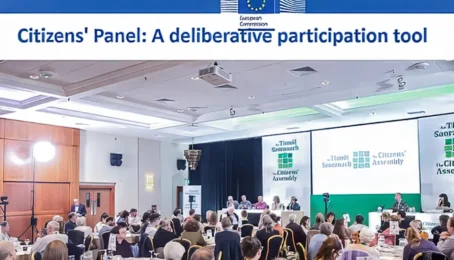
EIPA International Training Session Featuring Experts from CEUTP: On Partnership and Effective Public Participation
An international EIPA training session for DG REGIO took place on September 8–11, 2026. CUPT experts shared Poland’s experiences in building partnerships and fostering civic participation.
More
 18 September 2026 | International activities
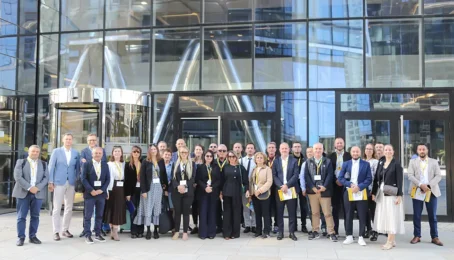
Poland’s Experience with EU Funds Provides Support for Albania. Study Visit to CEUTP
On September 16, 2026, CEUTP hosted a delegation from Albania as part of the “Support for Road Sector Reform and Road Safety Strategy” project. The discussions focused on planning cooperation and Poland’s experience in implementing EU transport funds.
More
 28 August 2026 | International cooperation
DG REGIO Peer2Peer Public Procurement: another meeting in the framework of international cooperation
Read about the next meeting of the DG REGIO group on public procurement with the participation of specialists in the management and control of EU projects.
More
 07 August 2026 | International cooperation
OECD report on citizen participation: CEUTP experience recognised among European good practices
OECD report “Citizen Participation for Better Cohesion Policy: Insights from 11 Pilot Initiatives” highlights a pilot project implemented by the Centre for EU Transport Projects (CEUTP) and the Upper Silesian-Zagłębie Metropolis (GZM). We are proud that our experience has been recognised as an example of good practice and can serve as an inspiration for public institutions across Europe.
More
Contact us
Plac Europejski 2, 00-844 Warsaw
Monday – Friday,
hours: 8:15 am – 4:15 pm


