




How can a walk around the city support citizen participation in the designing of EU-funded investments?
As part of its activities to increase public participation in the implementation of the Cohesion Policy, the CEUTP, together with its partners, “FADO” Social Cooperative and Metropolis GZM, continues the implementation of the second international project on social participation.
What is a research walk?
A research or a study walk, at the legislative level, is encompassed in the Revitalisation Act [1] and constitutes a form of social participation. Although the aforementioned document itself refers strictly to study walks, it is accepted to refer to them as research walks.
The walk is carried out according to a carefully prepared scenario. It enables the mapping (i.e. designating) specific locations as well as elements that require change/intervention along the walking route. The needs or feelings of the residents regarding different aspects of the space where the walk takes place are explored during the meeting and the ongoing conversations between the participants. Ideally, the walk should involve around 2-8, and a maximum of 10 people. Participants are residents of the given area. Furthermore, depending on the subject of the consultation, walks can also be carried out, for example, with specific groups such as people with disabilities, young people, older people or parents with young children, etc. The walk is moderated by the leading person according to a predefined and prepared scenario. The time to be spent on such an endeavour is between 30 minutes and 1.5 h.
The theme, and at the same time the key to understanding and applying this participatory tool, involves taking a look at a space from the perspective of the user/user of the space, while identifying the most problematic places and absorbing new ideas from residents for the area’s development.
A research walk is a field-based and interactive method of asking people living in an area for their opinions on a particular issue. It is a very useful tool if one wants to assess a space through the eyes of its everyday users (e.g. in terms of adaptation to the needs of people with disabilities, the elderly or a general assessment of specific architectural or infrastructural solutions), as well as to collect ideas for new solutions for spatial development, changes improving and facilitating movement or staying in a given area (e.g. new or changed locations of public transport stops, benches, paths).
A research walk allows users to be invited to critically review and revise the space. It allows the various solutions that have been used in the space to be evaluated in authentic, everyday circumstances of its use. The results and recommendations from such consultations can, for example, be used to help urban/municipal authorities and institutions design new or improve existing solutions for the urban fabric.
Above all, the research walk is a technique that makes it easy to involve participants and, most importantly, to interact with them in a friendly and casual “Sunday walk” atmosphere. However, it requires good preparation and competence on the part of the leading persons (including knowledge of the space to be explored, empathy, ability to ask questions and note answers and suggestions as they move with the group) [2].
May research walks as part of the project titled “How to open the railway to residents”
As assumed, the walks were carried out in May 2023 in the Metropolis GZM area and took place under the theme “Safe and comfortable surroundings of the Metropolitan Railway stations”. The walks were carried out and moderated by the Metropolis GZM’s representatives. They were implemented involving the support of experts from the CEUTP and FADO.
At the start of the project, the aim was to increase the level of social participation in the planned improvements to the operation of a selected transport corridor, the so-called “North-West”, in selected municipalities within the Metropolis GZM. Trains are due to return to the route from Tarnowskie Góry to Katowice in 2025. In addition to the route itself (track infrastructure), the surroundings of the new stations will be designed. The Metropolis GZM’s residents can influence the final design of these surroundings. The research walks were the formula used to gather feedback from the residents.
As part of the project, 12 such walks took place in five places – Bytom, Radzionków, Chorzów, Nakło Śląskie and Tarnowskie Góry. The residents walked along the railway line, where new platforms and Metropolitan Railway tracks are under construction.
During the research walks, residents highlighted the very wide range of the everyday urban space around them. Among other things, they noted the need to develop the railway offer so that people could travel to Katowice quickly and efficiently. Attention was also drawn to bus stops, the location of which should be in the vicinity of railway stations, so that it is possible to transfer quickly and efficiently from one form of public transport to another.
The safety and comfort of residents, particularly in the evening or after dark, proved to be an extremely important issue. Therefore, aspects that build individual comfort were also discussed, such as the lighting of access routes to the station as well as monitoring.
Residents who ride bicycles on a daily basis mentioned that railway stations should be equipped with covered and monitored bicycle racks, so that they can leave their bike safely and continue their journey by train. In addition, the importance of bicycle paths leading to the station was also highlighted.
A strongly resounding issue was also the easy and, above all, possible access to the station for people with disabilities, the elderly, parents with pushchairs and children (broadly, people with reduced mobility), or even travellers with large luggage. In many cases, small changes such as repairing the pavement, levelling high kerbs, adding a pedestrian crossing, removing barriers or adding stairs where they do not exist are enough to shorten the walk to the station by a few minutes or more.
The walks also involved discussions on the desire to highlight important places worth visiting that, as an area, feature or site, are a local attraction. The residents are proud of the legends and history that accompany them, so they are keen to highlight the uniqueness of the area.
Conclusions from the walks
After the walks, the project team evaluated and summarised what had been achieved, the good points of the walks and what should be improved to make the next walks even more beneficial and engaging for residents.
All the material collected during the walks will be analysed, resulting in a report that will be made public, shared with interested institutions and all those who participated in the walks.
What’s next for the railway in the North-West Corridor?
Once the infrastructure work carried out by the railwaymen has been completed, the location of several stations will change and new stations (Chorzów Uniwersytet, Bytom Stroszek, i.e. the moved former station “Bytom Północny”, and Tarnowskie Góry Osada Jana) will be constructed. The return of trains to this line and the Bytom-Gliwice connection introduced two years ago will facilitate fast and comfortable travel in several directions – to Gliwice, Bytom, Chorzów, Katowice, Tarnowskie Góry, Lubliniec and the airport and further, to Zawiercie and Częstochowa [3].
Further stages of the project
Further design work and consultations are planned for the Autumn. They will be carried out in an innovative, so-called “deliberation” format in line with the recommendations of the European Commission. The most important part of this stage will be the so-called “citizens’ forum”. The residents involved in this part will be selected at random from those interested in the citizens’ forum. These will include representatives of the area concerned, with whom the future appearance of the areas around the station will be discussed.
Cooperation with the OECD and the European Commission
In June of this year, the OECD, together with the European Commission, invited participants in the pilot project to a workshop on social participation organised in Paris.
The event was attended by representatives from Poland, Slovakia, Romania, Italy and Spain. The workshop served to share experiences, identify key challenges and plan the next steps in the partnership. The main conclusions on citizen participation in the Cohesion Policy were discussed, as well as the main challenges encountered in the first months of implementation.
There was a joint reflection on how to better support the adoption of a culture of resident participation beyond the pilot participants? How can the OECD and the European Commission share case studies to inspire other entities to participate, and how do we ensure peer learning?
The discussions with the OECD and pilot participants involved the possibility of better embedding participatory processes in the Cohesion Policy. The participants were invited to share ideas on how the European Commission or the OECD could better support future pilot projects or the Cohesion Policy’s ecosystem as a whole.
The workshop was very beneficial in terms of the exchange of experiences between participants, especially in the area of implementing participatory processes.
The project is schedule to be completed by the end of December 2023.
- [1] Act of 9 October 2015 on revitalisation; Polish Journal of Laws; Dz. U. of 2017, item 1023 with further amendments.
- [2] https://partycypacjaobywatelska.pl/strefa-wiedzy/techniki/spacery-badawcze/
- [3] https://metropoliagzm.pl/2023/04/21/bezpieczne-i-wygodne-otoczenie-stacji-kolei-metropolitalnej-zaczynaja-sie-spacery-badawcze/
About author
Piotr Kocjan
Chief Specialist at the Urban Projects Department, CEUTP


International cooperation
 18 September 2026 | International cooperation
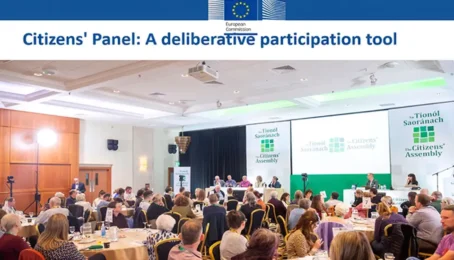
EIPA International Training Session Featuring Experts from CEUTP: On Partnership and Effective Public Participation
An international EIPA training session for DG REGIO took place on September 8–11, 2026. CUPT experts shared Poland’s experiences in building partnerships and fostering civic participation.
More
 18 September 2026 | International activities
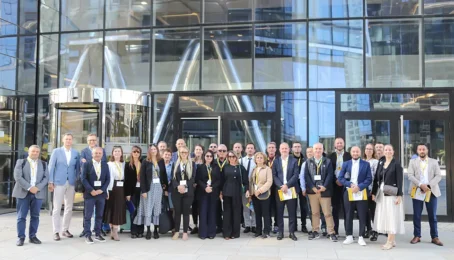
Poland’s Experience with EU Funds Provides Support for Albania. Study Visit to CEUTP
On September 16, 2026, CEUTP hosted a delegation from Albania as part of the “Support for Road Sector Reform and Road Safety Strategy” project. The discussions focused on planning cooperation and Poland’s experience in implementing EU transport funds.
More
 28 August 2026 | International cooperation
DG REGIO Peer2Peer Public Procurement: another meeting in the framework of international cooperation
Read about the next meeting of the DG REGIO group on public procurement with the participation of specialists in the management and control of EU projects.
More
 07 August 2026 | International cooperation
OECD report on citizen participation: CEUTP experience recognised among European good practices
OECD report “Citizen Participation for Better Cohesion Policy: Insights from 11 Pilot Initiatives” highlights a pilot project implemented by the Centre for EU Transport Projects (CEUTP) and the Upper Silesian-Zagłębie Metropolis (GZM). We are proud that our experience has been recognised as an example of good practice and can serve as an inspiration for public institutions across Europe.
More
Contact us
Plac Europejski 2, 00-844 Warsaw
Monday – Friday,
hours: 8:15 am – 4:15 pm


