




Integrated Traffic Model – freight model
As part of CUPT’s own operations, the ZMR cargo model was updated against the base year 2021 and traffic forecasts were developed for 2030. Originally, the model was based on the tool developed for the “Analysis of the inland water transport sector in the scope resulting from the modernization of the Oder Waterway and the Vistula River Waterway” .
The transport regions in the ZMR cargo model are poviats in terms of area. Seaports and inland ports were recognized as an additional category of communication areas. Considering the seasonality of transport processes in cargo traffic, the analysis was carried out on an annual basis. Cargo transport is expressed in tonnes.
The basic road network is based on the ZMR passenger model, but due to the different specificity and assumptions of the cargo model, it has been appropriately parameterized. Planned investments until 2030 are also included.
The basic railway network is based on the ZMR passenger model. In the model, as part of the update, railway speeds in cargo traffic for 2021 were additionally introduced in accordance with the PKP PLK S.A. regulations. For the forecast years, the network was developed based on consultations on the intentions of railway investments until 2030 (including the planned speeds for cargo traffic).
For the proper parameterization of the waterway network, a classification was adopted in accordance with the Regulation of the Council of Ministers of May 7, 2002 on the classification of inland waterways. Parameters of all waterways belonging to Oder Waterway, Vistula River Waterway, as well as sections of waterways whose functioning is or may be directly related to the functioning of the OWW or VWW have been introduced and defined, in particular the Odra-Vistula connection along the E70 route.
Transport volumes for 2030 were obtained using cumulative growth rates of cargo traffic for all groups of loads and means of transport. In the case of growth indicators for rail cargo traffic, indicators developed by experts from the Railway Institute were used.
Below is a map presenting transport within the above-mentioned means of transport for 2021 and 2030.
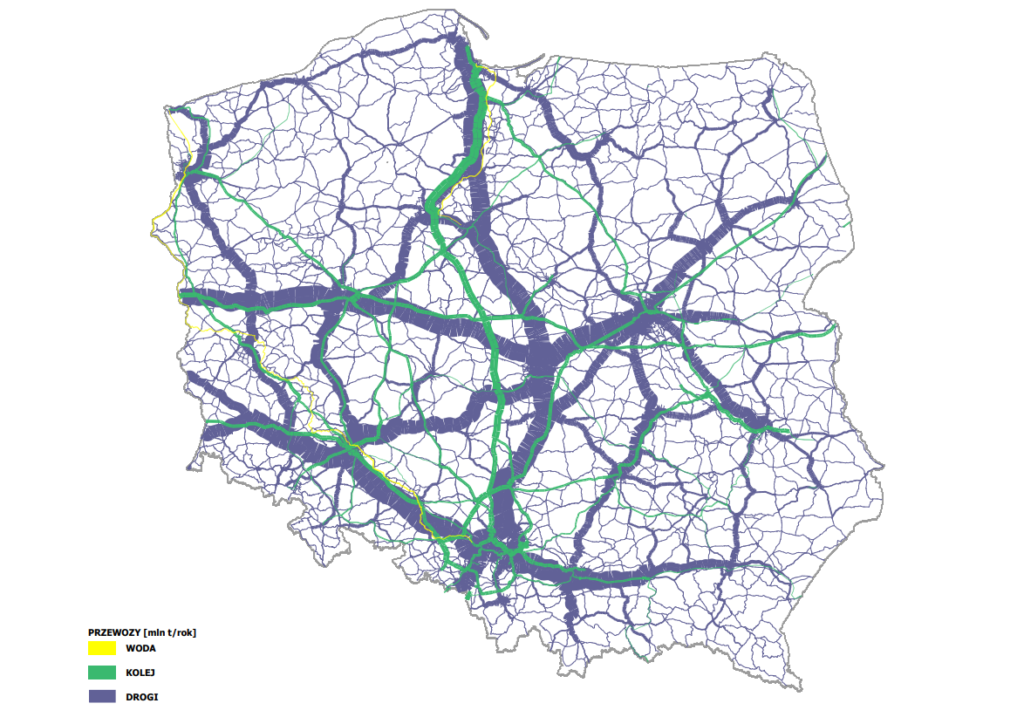
Cargo freight 2021
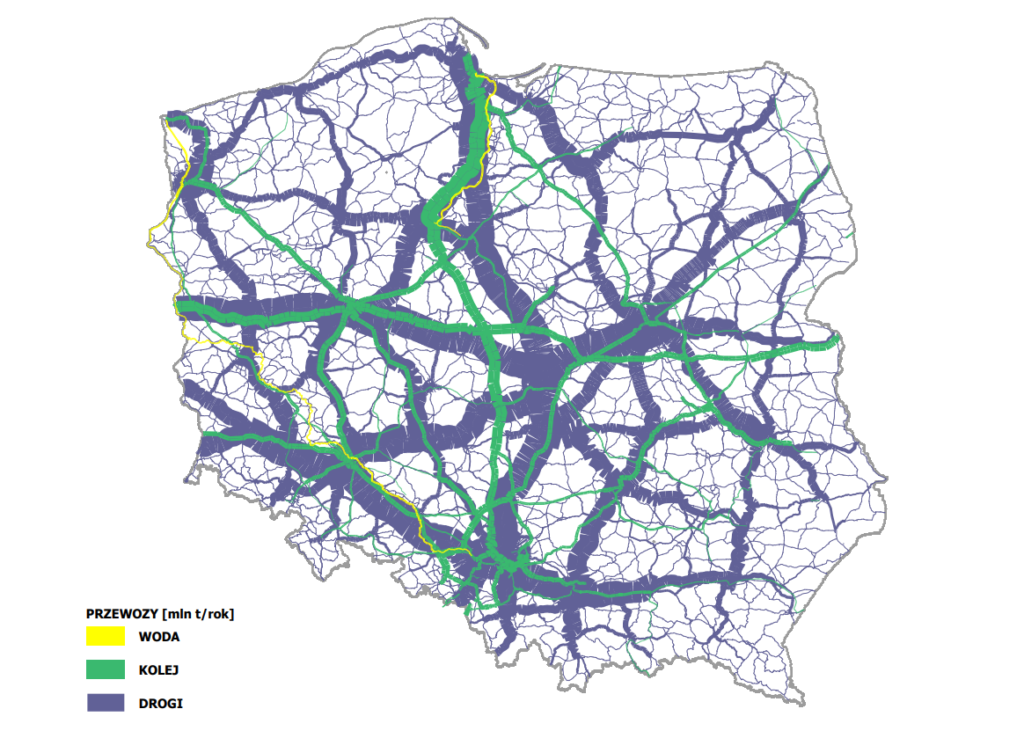
Cargo freight 2030
Transport systems and groups of loads
The ZMR cargo model takes into account transport by:
- Road,
- Railway,
- Water.
For each transport system, the following division of cargo into load groups expressed in tons has been introduced:
- Bulk (e.g. coal, ores, fuels, aggregates),
- Non-bulk (conventional non-containerized general cargo, e.g. food products, clothing, computer equipment),
- Intermodal (containerized loads).
At the moment, the Integrated Traffic Model – cargo model will not be made available to third parties. The tool will be used for own work and for work commissioned by the Ministries. In addition, optimization and development works as well as updates will continue, taking into account new data sources.


Contact us
Plac Europejski 2, 00-844 Warsaw
Monday – Friday,
hours: 8:15 am – 4:15 pm


