




The grand Piłsudski project returns to favour – with a historically high subsidy from the EU
Flagship investment of the Second Polish Republic – the Coal Trunk-Line – after nearly a century from its creation, will soon regain its former glory. PKP Polskie Linie Kolejowe, together with the Centre for EU Transport Projects, received European Funds for a comprehensive expansion of railway lines between Maksymilianów and Kościerzyna – the section spans over 100 km and is located on the route from Tricity to Bydgoszcz. The EU funds will also be used for reconstruction of a railway junction in Toruń.
Railway line no. 201, created in the years 1926–1933, was the largest and most modern investment of the interwar period. It allowed for comfortable and efficient transport of coal from Silesia to the Port of Gdynia, bypassing the – at that time – Free City of Danzig (now Gdańsk). After the Second World War, it lost its former function, and now it is mostly used for local transport.
However, it is going to change soon, thanks to a project by PKP Polskie Linie Kolejowe titled “Prace na odcinku Maksymilianowo – Kościerzyna” (Works on the Maksymilianowo – Kościerzyna section), which just received support from the European Funds for Infrastructure, Climate and Environment 2021–2027 programme. The investment worth over PLN 6.65 billion will receive funding in the amount of PLN 4.6 billion. It is the highest funding for the development of railway infrastructure in country’s history, not only under the FEnIKS programme, but since Poland became a Member State.
– It’s the highest amount of financing from the European Funds for Polish railway transport ever given, – emphasises Joanna Lech, Director of CEUTP. – Thanks to the support from the European Funds, we are creating a modern transport network. Routes like this one help connect residents faster and more efficiently. But it also means the development of eco-friendly cargo railway transport, which can become a real drive for Polish economy.
Faster from central Poland to Pomerania
The scope of work will cover a 100 km long section between Maksymilianów and Kościerzyna, and will be realised under four separate agreements in the years 2025–2029. Railway line no. 201 will receive a second track and will become electrified. New junction lines will be created, while modern and safe railway traffic management system will appear on the route. 10 new viaducts and 5 bridges will be constructed, and the existing structures will undergo thorough modernisation. Safety on around 30 road-railway crossings will also improve.
– Railway investments in Kujawsko-Pomorskie Voivodship are an example of how, with the European funds, we can realistically improve quality of life of residents, as well as strengthen competitiveness of our economy. Reduction of travel time, better access to railway transport, and more efficient cargo transport to the Port of Gdynia bring substantial benefits, which we will all soon experience, – says Dariusz Klimczak, Minister of Infrastructure.
Passenger infrastructure will also gain a new, modern look, meeting the needs of people with disabilities. Works on the Maksymilianowo – Kościerzyna section will involve modernisation of 8 stations and 10 railway stops, as well as installation of a Dynamic Passenger Information System, which will inform passengers about arrival and departure times in real time. But that’s not all: passengers can now also enjoy the new platforms in Szenajda in Kościerzyna County – up until now, trains didn’t stop in this town.
Alternative Bydgoszcz – Tricity connection coming soon
The “Prace na odcinku Maksymilianowo – Kościerzyna” (Works on the Maksymilianowo – Kościerzyna section) project is another part of a greater undertaking, the purpose of which is to create a new railway connection between Bydgoszcz and Tricity. Until now, with the support of, among others, the European Funds, works on the Kiełpinek – Glincz and Glincz – Kartuzy sections (Pomorskie Voivodship, Tricity agglomeration) have been implemented. In the following years, PKP PLK also intends to modernise the railway line between Kościerzyna and Gdynia.
All of this will allow to create alternative lines from Bydgoszcz to Tricity, resulting in a partial transfer of cargo traffic heading towards seaports in Gdynia and Gdańsk, which now is mostly conducted via railway lines no. 9, 131 and 202. This way the sections that play a crucial role in passenger transport can be relieved – e.g., the one between Tczew and Gdańsk Główny.
– Thanks to co-financing from the FEnIKS programme, we can implement ambitious projects which allow us to increase line capacity, improve safety and travel comfort. Over PLN 5.5 billion of co-financing will allow us to modernise key sections of railway infrastructure on the route from Bydgoszcz to Tricity, as well as in Toruń, – adds Małgorzata Kuczewska-Łaska, Member of the Management Board – Director for Finance of PKP Polskie Linie Kolejowe S.A.
Toruń: railway closer to people
We’re also bringing good news for the residents of Toruń – more EU funds are now available for improvement of communication within the city. PLN 550 million from the European Funds for Infrastructure, Climate and Environment 2021–2027 programme will help realise a cross-sectional project with a total value of nearly PLN 685 million.
– PKP PLK, together with city authorities, will ensure better access to railway transport, as well as more efficient travel within the Toruń railway junction – explains the Director for Finance of PKP PLK.
The works will include modernisation of the existing railway line no. 353 in the city centre, which connects Toruń Główny and Toruń Wschodni stations. The technical condition of the road and railway infrastructure will improve, and the travel will become more enjoyable and shorter by eliminating existing limitations, such as bottlenecks. The works will also cover nearby lines, i.e., no. 27, 207, and 246, as well as the reconstruction of roads, pavements and creation of new parking spaces.
Elimination of bottlenecks and a new platform
The greatest changes will appear in the vicinity of Pokoju Toruńskiego Square. What are the railwaymen planning? In the tunnel below the square, which currently only houses a single railway track, a second one will be added, which will eliminate the bottleneck limiting the performance of railway junction. Moreover, on the Toruń Miasto – Toruń Wschodni section and part of the Toruń Wschodni – Papowo Toruńskie route both the tracks and the railbed will be replaced, as well as a new and resilient traction network will be installed.
On the other hand, Toruń Wschodni station will receive a new – fourth – platform, while the three existing ones will gain a completely new look. New benches and a modern passenger information system will also appear. The existing overpass will also undergo reconstruction. The atmospheric station will charm the travellers once more!
Bridge renovation and a new pedestrian overpass
Another impressing structure is the Ernest Malinowski Railway Bridge – an iconic element of the Vistula River panorama of Toruń. The 19th century iron structure will undergo renovation: it will receive corrosion protection treatment, as well as a paint job. Abutments and bridge supports will also be renovated.
There is also something new coming up – something for the fans of walks and riverside views: from Toruń Miasto station to Dybowska Street, a pedestrian-cyclist path will be made, the main feature of which will be a catwalk running along the railway bridge.
Urban road investments
With pedestrians, cyclists and people with disabilities in mind, there are also plans of deconstruction and reconstruction of the Garbaty Mostek catwalk connecting Chrobrego and Sobieskiego streets. The new overpass above the railway tracks will feature two lifts, while the construction will provide safety to all traffic users. Furthermore, the city of Toruń will reconstruct Sowińskiego Street by the Toruń Miasto station, creating additional parking spaces.
Reconstruction of the railway line no. 353 is an investment into the future of Toruń: it will once more allow railway communication to become the city’s leading mode of transport. Modern infrastructure will facilitate daily travels, creating conditions for further development of public communication. Completion of works is planned for the 4th quarter of 2028.
About the European Funds
The European Funds for Infrastructure, Climate and Environment 2021–2027 (FEnIKS) programme is a continuation of the previous Infrastructure and Environment programmes (2007–2013, 2014–2020). Its main purpose is the development of technological and social infrastructure in the spirit of sustainable development. The Centre for EU Transport Projects (CEUTP) plays the role of an Intermediary Institution for transport-related priorities, such as:
- Public transport,
- Support for the transport sector from the Cohesion Fund and the European Regional Development Fund,
- Technical support.
Record-breaking funding
The entire allocation budget of the FEnIKS programme for Poland amounts to PLN 103.3 billion, of which more than half (PLN 55.1 billion) goes to transport. The highest funding is for railway – PLN 22.7 billion. By mid-August 2025, CEUTP has:
- signed 11 co-financing agreements for a total amount of PLN 4.3 billion (approx. 20% of allocation),
- approved 24 requests for payment for PLN 1.6 billion.
On the other hand, for public transport Poland has an allocation budget of PLN 8.5 billion. Over half of the funding has already entered the game – 39 agreements with a total value of PLN 4.6 billion have already been signed.


EFICE
 28 June 2026 | EFICE
More Road Projects Funded by European Funds
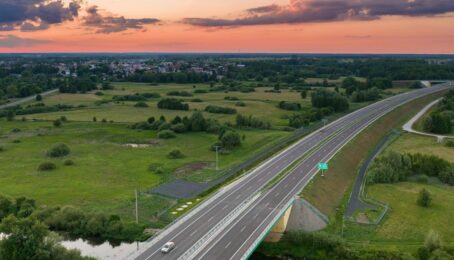
Two more projects by the General Directorate for National Roads and Motorways have received funding from the European Funds for Infrastructure, Climate, and Environment Program 2021–2027. These projects involve the construction of the Morawica and Wola Morawicka bypass along National Road DK73, as well as sections of the S19 expressway between Międzyrzec Podlaski and Lubartów Północ.
More
 25 June 2026 | EFICE
CEUTP Training for Employees of Provincial Monument Preservation Offices
On June 16–17, 2026, CEUTP experts conducted a training session in Wrocław for employees of the Provincial Offices for the Protection of Historical Monuments, focusing on the principles for implementing a technical assistance project under the European Funds for Infrastructure, Climate, and Environment 2021–2027.
More
 25 June 2026 | EFICE
Expert Workshop on Dual-Use Projects and Transportation Resilience, Featuring CEUTP
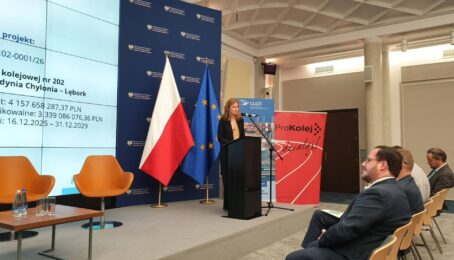
On June 19, 2026, an expert workshop titled “Dual-Use Projects and Building the Resilience of the Railway System with the Support of European Funds” was held in Warsaw. Among those participating in the event was Sylwia Cieślak-Wilk, deputy director of CEUTP, who presented an institutional perspective on the role of dual-use infrastructure in the EU’s current and future financial frameworks.
More
 25 June 2026 | EFICE
Nearly 424.6 mln zł from European Funds for the modernization of the Ujście Nysy barrage
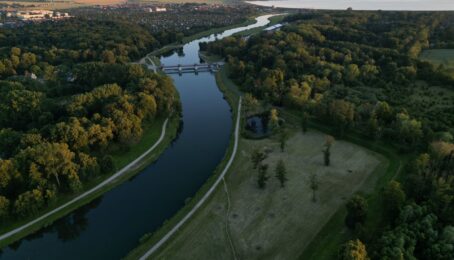
The Center for EU Transport Projects has signed two agreements with the State Water Management Authority “Wody Polskie” regarding the modernization of the Ujście Nysy weir on the Oder River. The projects, with a total value of over 538 mln zł, will receive nearly 424.6 mln zł in funding from the European Funds for Infrastructure, Climate, and Environment 2021–2027 program.
More
Contact us
Plac Europejski 2, 00-844 Warsaw
Monday – Friday,
hours: 8:15 am – 4:15 pm


