




Brussels workshop: new DNSH guidelines to be simpler and more practical
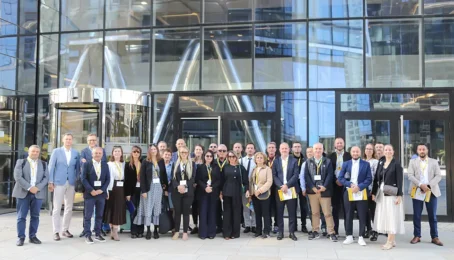
A workshop on the application of the Do No Significant Harm (DNSH) principle to projects financed by EU funds was held in Brussels on May 18-19. The meeting was attended by experts from all member states – Poland was represented, among others, by Ewa Paderewska, head of the Environmental Protection Department at CEUTP.
- Maybe you would like to read: CUPT analysis: New DNSH guidelines for the next financial perspective – when will we know the details?
Representatives of the European Commission presented the directions of work on the new unified DNSH guidelines for the next financial perspective. The discussion confirmed the importance of this rule as one of the key tools for environmental protection, but at the same time pointed to the need to simplify and clarify the way it is applied.
DNSH: less paperwork, more practice
Workshop participants unanimously stressed that DNSH should not be merely a reporting obligation or an excessive administrative burden. Its practical role – supporting sustainable investment preparation and implementation – remains a priority.
The European Commission has announced that future guidelines will:
- simpler and clearer,
- tailored to the scale and nature of the projects,
- results-oriented.
Among the key demands were:
- Proportionality – limiting requirements to small projects with low environmental impact,
- Clarity of rules – understandable guidelines for administration and beneficiaries,
- A practical approach to documentation – without duplication of obligations under EU and national law,
- Exclusion list – a catalog of activities that do not require a DNSH assessment.
Better link to environmental impact assessment
One of the most important topics was the relationship between DNSH and environmental impact assessment (EIA). The need for greater consistency between the two processes and reducing duplication of requirements was pointed out.
For projects covered by the EIA Directive:
- obtaining an environmental decision should, in principle, confirm compliance with DNSH,
- responsibility for the assessment should remain with the relevant environmental authorities.
For smaller projects that do not require an EIA, the use of national regulations and technical standards was considered sufficient.
Climate change adaptation and infrastructure resilience
Great emphasis was placed on:
- Development ofnature-based solutions (nature-based solutions),
- Strengthening the resilience by design approach, i.e. taking climate resilience into account at the design stage of an investment.
Practical challenges and proposals for change
The discussion also covered specific problems raised by institutions and beneficiaries, including:
- assessing compliance in a circular economy,
- confirming the application of best available techniques (BAT),
- The scope of the required documentation and monitoring of project implementation.
It also pointed out the need to take into account new EU regulations, such as:
- Critical Raw Materials Act,
- Nature Restoration Law.
Flexibility and national approach
It was stressed that the future DNSH framework should take into account the specifics of member states. Among the solutions considered were:
- DNSH national focal points,
- Knowledge sharing networks between institutions,
- The possibility of creating complementary national criteria.
What’s next?
The European Commission has announced the publication of draft new DNSH guidelines in July or August this year. The document is expected to build on past experience and focus on simplifying the rules and making them more useful for institutions and beneficiaries.
International activities
 16 October 2026 | International cooperation
How to Effectively Use EU Funds for Transportation?
On October 13 in Warsaw, representatives from nine EU candidate countries learned about Poland’s experience with infrastructure financing.
More
 16 October 2026 | International cooperation
TAIEX Mission in Sofia with the Participation of CEUTP Experts
The main objective of the workshop organized under the TAIEX instrument was to exchange experiences regarding the implementation of transportation projects financed by EU funds. The event was attended by CEUTP experts, who presented Polish solutions and best practices in this area.
More
 18 September 2026 | International activities
EIPA International Training Session Featuring Experts from CEUTP: On Partnership and Effective Public Participation
An international EIPA training session for DG REGIO took place on September 8–11, 2026. CUPT experts shared Poland’s experiences in building partnerships and fostering civic participation.
More
 18 September 2026 | International cooperation
Poland’s Experience with EU Funds Provides Support for Albania. Study Visit to CEUTP
On September 16, 2026, CEUTP hosted a delegation from Albania as part of the “Support for Road Sector Reform and Road Safety Strategy” project. The discussions focused on planning cooperation and Poland’s experience in implementing EU transport funds.
More
Contact us
Plac Europejski 2, 00-844 Warsaw
Monday – Friday,
hours: 8:15 am – 4:15 pm


