




Community Mobility – A City Scavenger Hunt Funded by the EU. Report, Workshops, and Conclusions
On June 11, Warsaw hosted a unique urban game titled “Community Mobility, ” organized by the Center for EU Transport Projects. The event combined education about European funds, a practical assessment of the city’s accessibility, and the integration of participants representing diverse backgrounds.
The event was attended by representatives of national and local government, nongovernmental organizations, secondary school students, and journalists. As a result, the discussion on urban mobility was multifaceted and grounded in the real-life experiences of various social groups.
The outdoor portion of the game
Participants took on the roles of accessibility auditors, parents with double strollers, passengers with special needs, and users of “last-mile” transportation. They took measurements, analyzed infrastructure, recorded interviews with residents, and identified areas that could be improved using funds from the EFICE 2021–2027 program.
The tasks included, among others:
- assessment of architectural barriers,
- an analysis of the readability of passenger information,
- identifying locations for new cargo bike stations,
- observing the challenges faced by older adults and parents with strollers,
- an assessment of infrastructure in terms of the needs of blind and neurodiverse individuals,
- education about EU funds and the “less waste” principle.
Workshop: Design Thinking – From Observation to Recommendations
After completing the fieldwork, the participants gathered for a joint Design Thinking workshop. In a spirit of teamwork—over coffee and cookies—the teams transformed their observations of the city into concrete, actionable recommendations that could be funded by European Funds.
It was right here that ideas emerged regarding:
- new solutions for “last-mile” delivery,
- facilities for people with special needs,
- improvements to the passenger information system,
- soft measures to support infrastructure investments.
Panel Discussion: “Mobility of the Future”
The event concluded with an expert panel featuring an accessibility specialist and a representative of the City of Warsaw. The panelists addressed the proposals developed by the participants, commenting on their feasibility, potential for implementation, and alignment with mobility development trends in Warsaw and the EU.
The discussion showed that residents and users of the city are able to accurately identify problems and propose solutions that are not only practical but also in line with European trends in sustainable transportation.
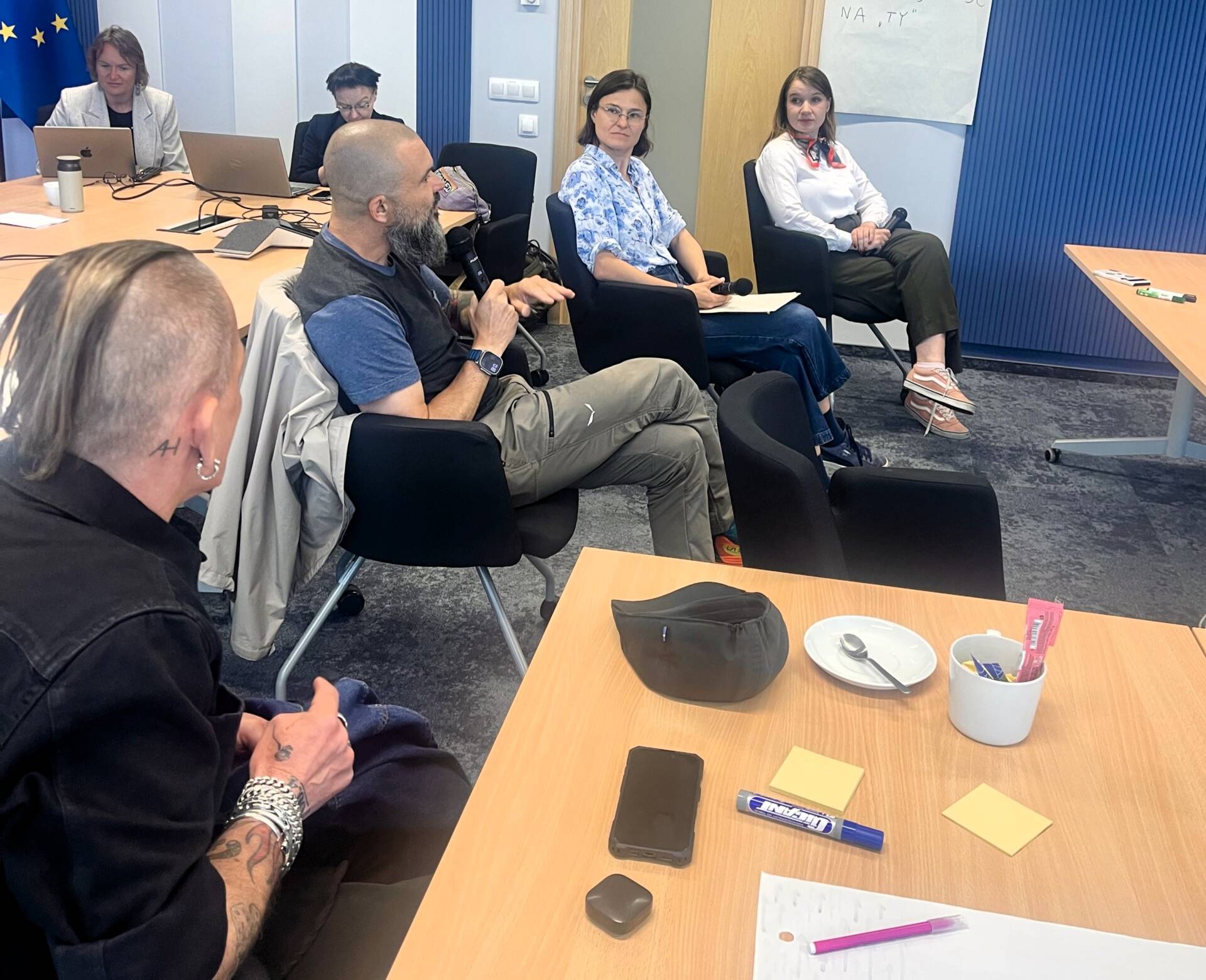
Key takeaways from the event
- Accessibility is the foundation of mobility. Even minor barriers—such as a high curb, a lack of contrast, or font that is too small—can effectively exclude some residents.
- Information must be inclusive. Multilingual signage, improved readability, and better navigation are real needs, especially at transit hubs.
- “Last-mile” delivery has enormous potential. Residents are willing to combine the subway with cycling if the infrastructure is convenient and safe.
- EU funds are truly transforming the city. Many infrastructure projects that we take for granted today were made possible thanks to European support—and there is still room for further development.
- Empathy changes your perspective. Fieldwork has shown how different groups experience the same space—and how important universal design is.
- Collaboration among different groups yields the best results. The combination of insights from government officials, NGOs, young people, and experts has created a unique space for dialogue and collaborative thinking about the future of mobility
We would like to thank all the participants who, despite the inclement weather, bravely completed the game’s challenges and then shared their reflections.
Urban Transport
 30 September 2026 | Urban Transport
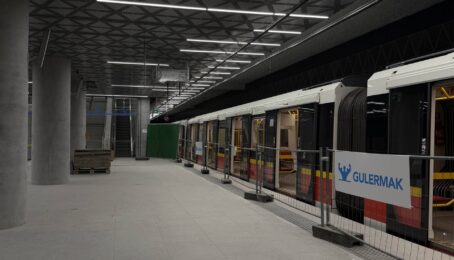
Warsaw metro line 2: the western section is nearly finished (photo gallery)
Is that light at the end of the tunnel? It certainly is! Only weeks remain until three new metro stations in Warsaw’s Bemowo district are finished, together with the Mory technical and stabling depot (STP Mory). We visited the construction site of the project, which is funded by the European Funds for Infrastructure, Climate, Environment 2021-2027 (FEnIKS) programme.
More
 09 September 2026 | Research and evaluation
CEUTP report: From commuter rail to metro. Analysis of options for developing high-capacity transport in Polish metropolitan areas
At the request of the Minister of Infrastructure, the Centre for EU Transport Projects (CEUTP) has prepared a strategic report that assesses whether building metros and other high-capacity rail systems makes sense in Poland’s 12 largest metropolitan areas.
More
 29 June 2026 | National Recovery Plan
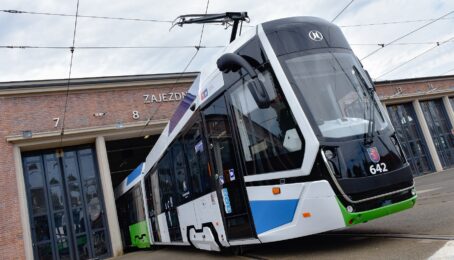
Over 81.6 million PLN from the National Recovery Plan for new trams in Szczecin
CEUTP supports the development of modern urban transportation in Szczecin. Thanks to over 81.6 mln zł from the National Recovery Plan, Tramwaje Szczecińskie has purchased 8 bidirectional, fully low-floor trams that will improve the comfort, accessibility, and quality of residents’ daily commutes.
More
 16 May 2026 | Event reports
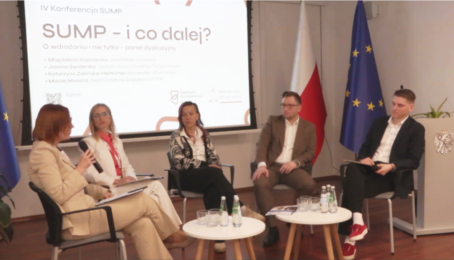
Sustainable urban mobility – how to implement it effectively?
European funds, appropriate legal regulations and involvement of local communities are among the key elements in creating conditions for the development of sustainable urban mobility, the participants of the 4th SUMP Conference pointed out. Among the speakers was Joanna Swiderska of CEUTP.
More
Contact us
Plac Europejski 2, 00-844 Warsaw
Monday – Friday,
hours: 8:15 am – 4:15 pm


